Ultimate Guide to Gorilla Behavior
April 26, 2026
Ultimate Guide to Safari Safety-Uganda Safari
April 28, 2026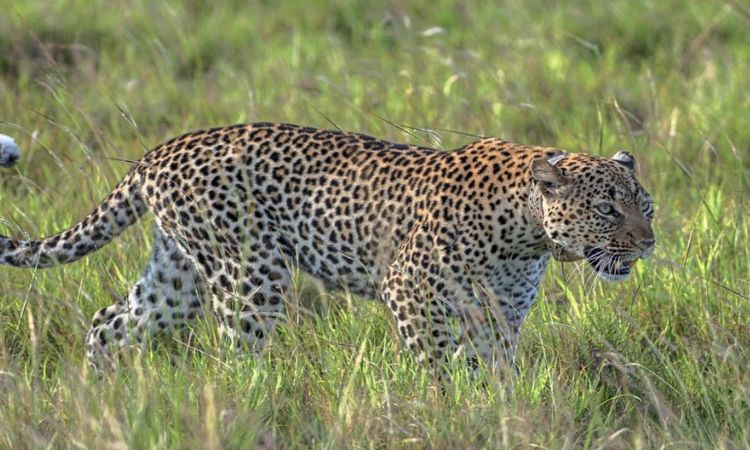
Ultimate Guide to Gorilla Predators-Uganda Adventures.
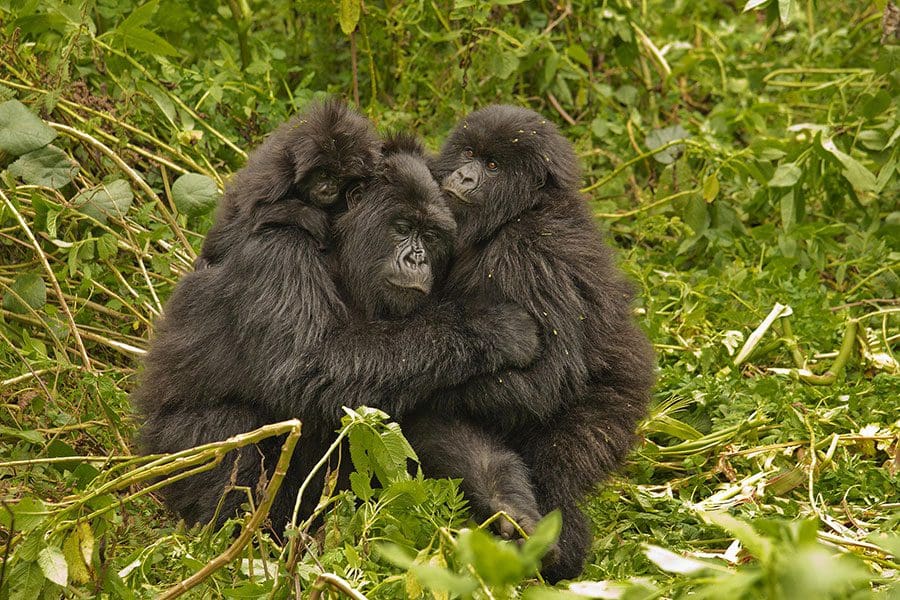
Ultimate Guide to Gorilla Predators-Uganda Adventures.- Mountain gorillas are among the most powerful and intelligent primates in Africa. Found in Uganda, Rwanda, and the Democratic Republic of Congo, they live deep in montane forests where they face very few natural threats.
In this ultimate guide to mountain gorilla predators and prey, we explore what eats gorillas in the wild, their diet, and the real threats to their survival.
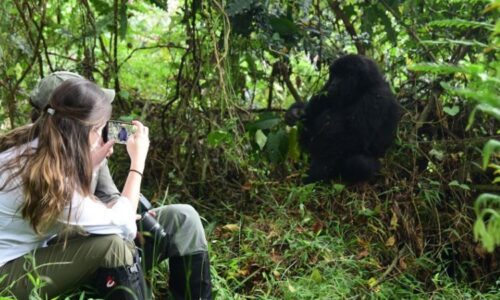
Gorillas Bond With Humans
Are Mountain Gorillas Predators or Prey?
To begin with, mountain gorillas are neither active predators nor common prey animals.
In fact, they are:
- Primarily herbivores
- Highly social primates
- Strong group defenders
Because of their size and group protection, they rarely fall victim to natural predators. Therefore, gorillas occupy a unique position in the food chain.
Key SEO keywords:
mountain gorilla predators, gorilla prey, what eats gorillas, gorilla diet, gorilla survival in the wild
Mountain Gorilla Diet: What Do Gorillas Eat?
In addition, understanding what gorillas eat helps explain their survival strategy.
Mountain gorillas are strict herbivores. Their diet includes:
- Leaves and shoots
- Bamboo stems
- Wild celery
- Tree bark
- Fruits (seasonal)
- Roots and pith
Occasionally, they may eat insects like ants or termites, but this is very rare.
Furthermore, an adult male gorilla can consume up to 30–40 kg of vegetation daily to sustain its large body.
Do Gorillas Have Prey?
Importantly, gorillas do not hunt or kill prey animals.
Unlike carnivores, mountain gorillas:
- Do not chase animals for food
- Do not rely on meat consumption
- Survive entirely on plant-based diets
As a result, they are classified as folivores rather than predators.
Mountain Gorilla Predators in the Wild
Although gorillas are strong and intelligent, they still face limited natural threats.
-
Leopards (Rare Natural Predator)
To start with, leopards are the only confirmed natural predator of gorillas.
However, attacks are very rare because:
- Adult gorillas are extremely strong
- Silverbacks protect the group
- Gorillas live in tightly bonded families
Leopards may only target:
- Infants
- Juveniles
- Weak or isolated individuals
-
Humans (Main Threat)
More importantly, humans are the greatest danger to mountain gorillas.
Human-related threats include:
- Poaching
- Habitat destruction
- Illegal snares
- Disease transmission
Therefore, even though humans are not natural predators, they remain the most significant cause of gorilla population decline.
Other Gorilla Natural Enemies
In addition to predators, gorillas face other survival challenges:
Disease
For example, respiratory infections and viruses can spread from humans to gorillas.
Habitat Loss
Deforestation reduces available food and living space.
Internal Conflicts
Sometimes, rival silverbacks may fight over leadership or group control.
How Mountain Gorillas Survive in the Wild
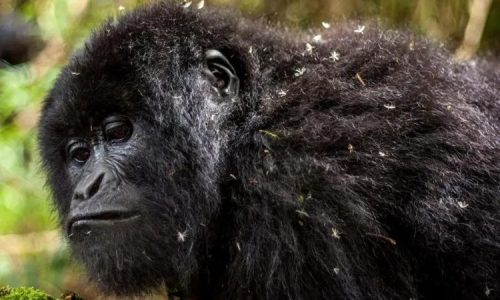
Furthermore, mountain gorilla survival depends heavily on social structure.
They survive through:
- Strong silverback protection
- Group defense strategies
- Vocal alarm communication
- Tight family bonding
Because of this, gorilla groups can defend themselves effectively against most threats.
Conservation and Protection of Mountain Gorillas
In addition, conservation efforts have significantly improved gorilla survival.
Key protection measures include:
- Anti-poaching patrols
- Habitat conservation programs
- Veterinary monitoring
- Eco-tourism revenue support
As a result, mountain gorilla populations have increased from critically low numbers to over 1,000 individuals today.
Why Gorilla Predators Are Rare
Unlike many wild animals, mountain gorillas live in high-altitude forests where:
- Large carnivores are scarce
- Human access is limited
- Dense vegetation offers protection
Therefore, their survival depends more on human conservation than natural predation.
Final Thoughts on Mountain Gorilla Predators
In conclusion, mountain gorillas have very few natural predators. Leopards pose minimal risk, while humans remain the most significant threat.
Their herbivorous diet, strong family structure, and protected habitats make them one of the most resilient primates in Africa.
Book Your Gorilla Safari with Chimp Homes Uganda Safaris
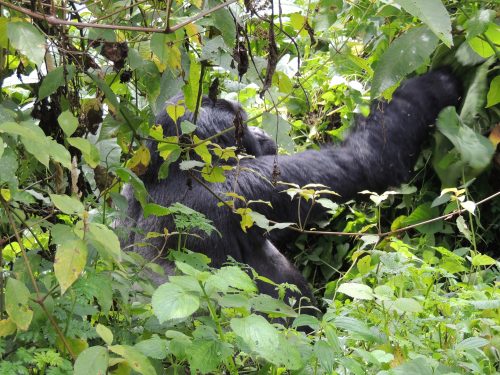
Gorilla Trek Guide
If you want to experience mountain gorillas in the wild, you can book a guided trekking adventure with Chimp Homes Uganda Safaris.
They offer:
- Gorilla trekking in Bwindi Impenetrable Forest
- Mgahinga National Park tours
- Chimpanzee tracking experiences
- Wildlife safari packages in Uganda and Rwanda
Call Us: +256742874045
or +256 703903243
Email Us: info@chimphomesafaris.com
Gmail: chimphomesugandasafaris@gmail.com
Contact Chimp Homes Uganda Safaris today to plan your unforgettable gorilla trekking safari in Africa.