The Ultimate Guide to Uganda Gorilla & Chimp Trekking Rules
March 12, 2026
The Ultimate Guide: Can Gorillas Bond With Humans?
March 14, 2026
The Ultimate Guide to Gorilla Intelligence
The Ultimate Guide to Gorilla Intelligence- Gorillas are among the most intelligent animals on Earth. As members of the great ape family, they share a close evolutionary relationship with humans and demonstrate remarkable cognitive abilities. Although they are often portrayed as powerful and intimidating animals, gorillas are actually gentle, highly social, and emotionally complex.
Scientific research over the past several decades has revealed that gorilla intelligence rivals that of a young human child in several areas, including memory, communication, emotional awareness, and problem-solving. Understanding how intelligent gorillas are not only fascinates scientists but also highlights the importance of protecting these endangered primates.
Gorilla Trekking Documents
This guide explores how intelligent gorillas really are, how their brains support complex thinking, and why their intelligence matters for conservation.
Understanding the Gorilla Brain
The intelligence of gorillas begins with their brain structure. An adult male gorilla, often called a silverback, has a brain volume of roughly 500 to 600 cubic centimeters, which is smaller than the average human brain of about 1,350 cubic centimeters. However, brain size alone does not determine intelligence.
When researchers examine the brain-to-body ratio, gorillas rank among the most intelligent primates. Only humans and a few marine mammals, such as dolphins, have higher ratios.
More importantly, gorillas possess a highly developed neocortex, the part of the brain responsible for advanced thinking, learning, and memory. Their brains also contain mirror neurons, which help them understand the actions and emotions of others. These neurological features support the strong social awareness and emotional sensitivity that gorillas demonstrate in both wild and captive environments.
Gorilla Communication and Language
Contrary to popular belief, gorillas communicate in complex ways. In the wild, they use a variety of vocal sounds, body language, and facial expressions to interact with members of their group.
Researchers have identified more than 25 distinct vocalizations, including:
- Grunts used for social bonding
- Hoots used during group movement
- Alarm calls to warn of danger
- Play signals among young gorillas
Communication also involves gestures such as chest-beating, hugging, touching, and playful facial expressions.
One of the most famous examples of gorilla communication comes from Koko, a western lowland gorilla studied by researchers for decades. Koko learned more than 1,000 signs in a modified version of American Sign Language and could understand thousands of spoken English words.
Through sign language, Koko demonstrated creativity, humor, and emotional awareness. She even expressed sadness when her pet kitten died, showing that gorillas are capable of complex emotional expression.
Problem-Solving and Tool Use
For many years scientists believed gorillas rarely used tools. However, modern research has revealed that they possess impressive problem-solving skills.
In the wild, gorillas have been observed using tools in several ways:
- Using sticks to test water depth before crossing streams
- Using branches as walking aids on uneven terrain
- Using vegetation to create stable platforms in swampy areas
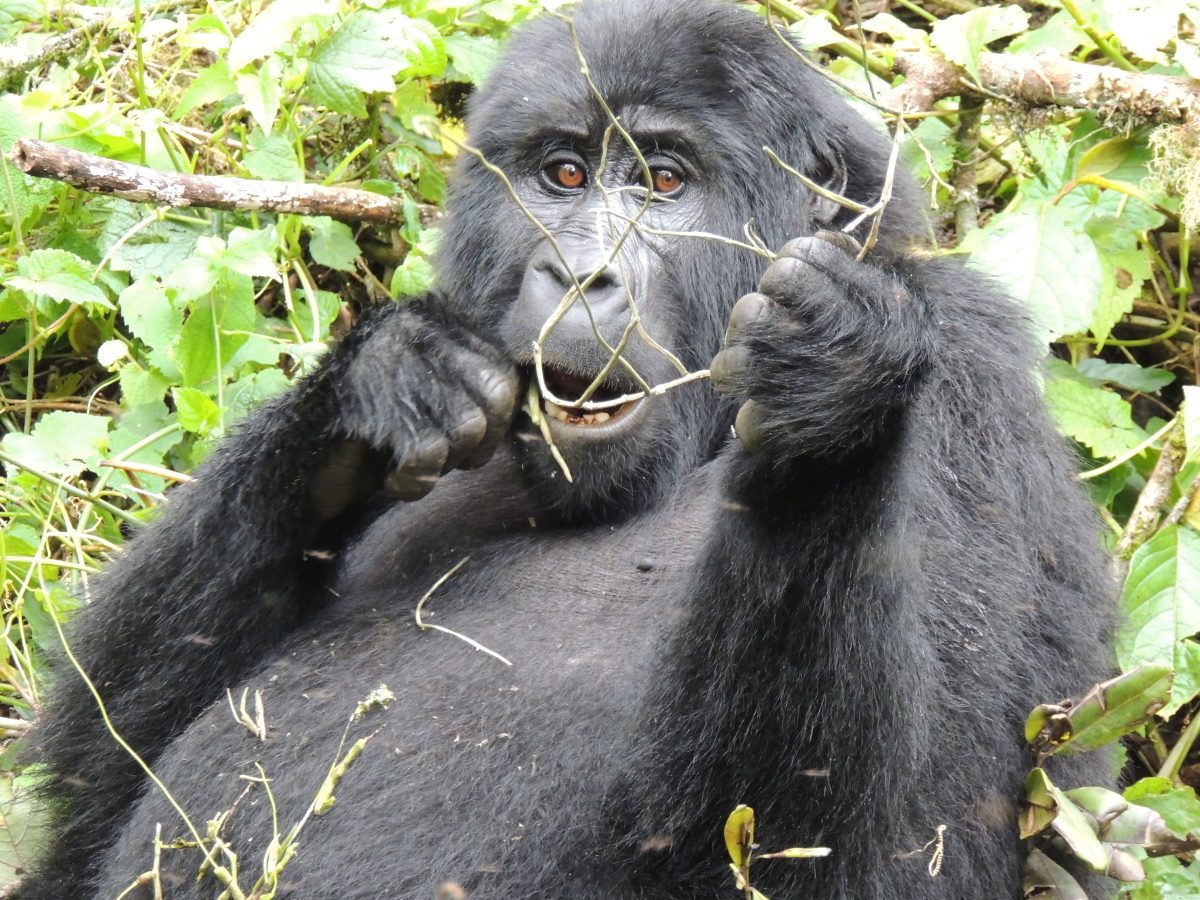
In controlled research environments, gorillas can solve multi-step puzzles and use objects such as sticks or rakes to retrieve food placed out of reach.
These observations demonstrate that gorillas possess insight learning, the ability to understand how objects can be used to solve practical problems.
Memory and Learning Abilities
Another important aspect of gorilla intelligence is their strong memory. Studies show that gorillas can remember the location of hidden food after long delays, indicating well-developed short- and long-term memory.
In the wild, this ability is essential for survival. Gorillas navigate vast forest habitats and remember the locations of fruit trees and feeding areas across large territories.
Young gorillas also learn by observing older members of their group. Through this process of social learning, they acquire important skills such as:
- Nest building
- Foraging techniques
- Social behaviors within the troop
This learning process closely resembles the way human children learn from parents and other adults.
Emotional Intelligence in Gorillas
Gorillas are not only intelligent in practical ways—they are also emotionally sophisticated animals. Scientific observations and field research show that gorillas experience a wide range of emotions.
Examples of gorilla emotional behavior include:
- Forming strong bonds with family members
- Showing empathy toward distressed individuals
- Mourning the loss of group members
- Playing and expressing joy
- Protecting infants within the group
Researchers have also observed adult males comforting younger gorillas through gentle physical contact and soft vocalizations. These behaviors suggest that gorillas possess emotional intelligence and empathy, traits once thought to be unique to humans.
Social Intelligence and Gorilla Family Life
Gorilla society is highly structured and revolves around family groups known as troops. Each troop is led by a dominant silverback male who makes decisions about group movement, feeding locations, and protection from predators.
Although silverbacks are extremely powerful, they usually maintain peace within the group without violence. Instead, conflicts are often resolved through visual displays such as chest beating or posture changes.
Gorilla social life also involves grooming, playing, and cooperative behaviors that strengthen group bonds. Females sometimes move between groups, while young gorillas stay with the troop until maturity.
This complex social structure demonstrates advanced social cognition, including understanding relationships, hierarchy, and group cooperation.
Gorilla Intelligence Compared to Humans
Gorillas cannot match the advanced language, technology, and cultural complexity of humans. However, researchers often compare their cognitive abilities to those of a human child between three and five years old.
Gorillas have demonstrated abilities such as:
- Self-recognition in mirrors
- Understanding cause and effect
- Recognizing relationships within social groups
- Using tools and solving simple problems
Although they lack spoken language due to anatomical limitations, their communication skills and emotional awareness are highly developed.
Gorilla Intelligence Compared to Other Animals
When compared to other species, gorillas rank among the most intelligent animals.
Compared to Chimpanzees
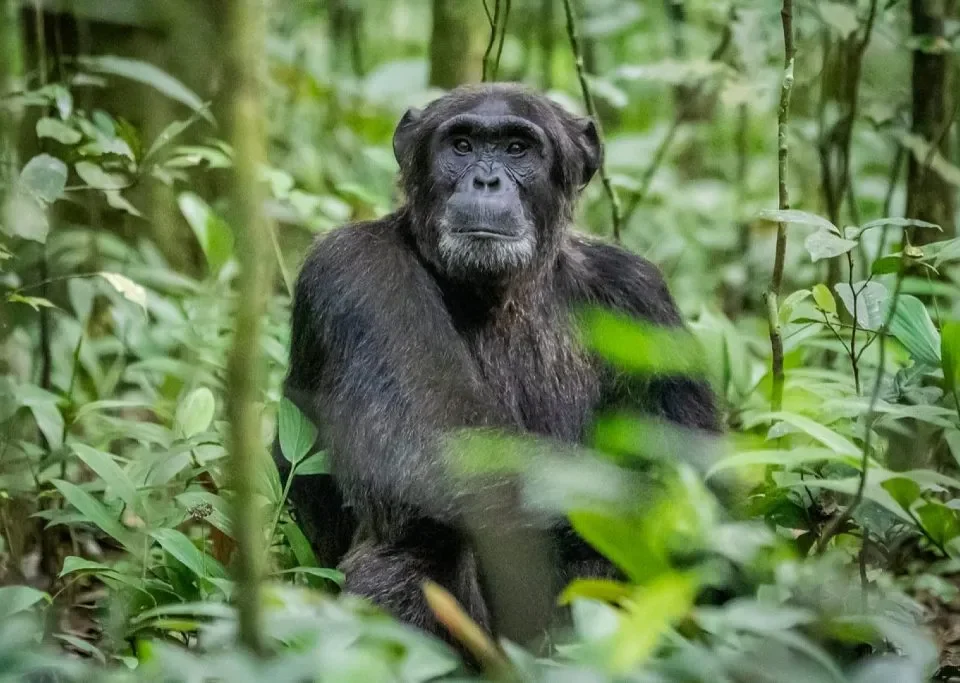
Chimpanzees tend to perform better in mechanical problem-solving and tool innovation. However, gorillas often demonstrate equal or stronger abilities in emotional understanding and social harmony.
Compared to Dogs
Dogs are highly intelligent animals, particularly in understanding human gestures. However, gorillas surpass dogs in many areas including:
- Self-awareness
- Tool use
- Long-term memory
- Complex social behavior
As a result, gorilla intelligence is often considered closer to that of a young human child.
Where Gorillas Live
Gorillas are native to the forests of Central and East Africa. Scientists recognize two main species:
Western Gorillas
- Western Lowland Gorillas
- Cross River Gorillas
These populations live in the rainforests of countries such as Cameroon, Gabon, and the Republic of Congo.
Eastern Gorillas
- Mountain Gorillas
- Grauer’s Gorillas
Mountain gorillas are found in the high-altitude forests of Uganda, Rwanda, and the Democratic Republic of Congo, including Bwindi Impenetrable National Park and the Virunga Mountains.
Are Gorillas Endangered?
Yes, gorillas are classified as endangered or critically endangered depending on the subspecies. Major threats include:
- Habitat loss from agriculture and logging
- Poaching and illegal wildlife trade
- Disease transmission from humans
- Political instability in some regions
However, conservation efforts have produced encouraging results. For example, mountain gorilla populations have increased significantly in recent decades, thanks to strict protection and responsible tourism.
Why Gorilla Intelligence Matters for Conservation
Gorilla & Chimp Trekking
Understanding gorilla intelligence helps people appreciate how emotionally and socially complex these animals are. This awareness encourages stronger conservation efforts and responsible tourism practices.
Gorilla trekking tourism, when managed carefully, plays an important role in conservation by:
- Funding wildlife protection programs
- Supporting local communities
- Encouraging environmental awareness
Protecting gorillas ultimately protects the forests they depend on and preserves one of humanity’s closest living relatives.
How to Book a Safari with Chimp Homes Uganda Safaris
One of the best ways to experience gorillas in the wild is through a gorilla trekking safari in Uganda.
Chimp Homes Uganda Safaris specializes in organizing unforgettable primate adventures, including:
- Gorilla trekking in Bwindi Impenetrable National Park
- Chimpanzee trekking in Kibale National Park
- Wildlife safaris in Queen Elizabeth National Park
- Custom Uganda and Rwanda safari itineraries
To book your safari:
- Contact the Chimp Homes Uganda Safaris team with your travel dates
- Secure your gorilla trekking permits in advance
- Choose accommodation and transportation options
- Confirm your itinerary and prepare for your adventure
Call Us: +256742874045
or +256 703903243
Email Us: info@chimphomesafaris.com
Gmail: chimphomesugandasafaris@gmail.com
Chimp Homes Uganda Safaris will handle all logistics to ensure you enjoy a safe, educational, and unforgettable encounter with one of the world’s most intelligent animals in their natural habitat.