The Ultimate Guide to Bwindi Impenetrable National Park
December 10, 2025
The Ultimate Guide to the Savanna Patas Monkey in Uganda
December 13, 2025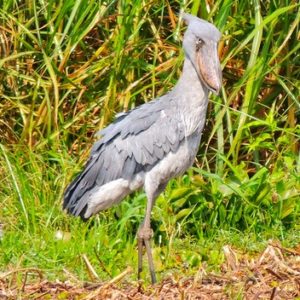
The Ultimate Guide to Shoebill Storks in Uganda
Habitat, Behavior, Facts & Where to See Them
The Ultimate Guide to Shoebill Storks in Uganda – The Shoebill Stork , locally known as Bulwe in Luganda, is one of Africa’s most extraordinary and sought-after bird species. Famous for its prehistoric appearance and remarkable hunting behavior, the Shoebill is considered a “must-see” bird for birdwatchers visiting Uganda. This guide explores everything you need to know about the Shoebill—its characteristics, habitat, behavior, breeding, and the best places to see it in Uganda.

Shoebill Storks
What Is a Shoebill Stork?
The Shoebill Stork is a large, legendary wetland bird found only in certain parts of Africa. Its unique features and slow, calculated movements give it an almost dinosaur-like appearance, making it one of the most fascinating birds in the world.
Key Characteristics
- Height: About 128 cm
- Weight: 5–7 kg
- Color: Adults are grey; immature birds are brown
- Eyes: Pale grey with excellent vision
- Legs: Long grey legs adapted for wading in wetlands
The Shoebill’s massive shoe-shaped bill, equipped with a sharp hook and scissor-like edges, enables it to catch and kill slippery prey such as fish and amphibians.
Where Are Shoebill Storks Found?
Shoebills are endemic to Africa and inhabit undisturbed wetlands. They are found in:
- Uganda
- South Sudan
- Ethiopia
- Rwanda
- Previously seen in Burundi
Shoebills in Uganda
Uganda is one of the best countries in Africa to see Shoebill Storks in the wild. Their sightings are most reliable in:
- Mabamba Wetland (Lake Victoria) – Uganda’s top Shoebill destination
- Semliki Wildlife Reserve
- Katonga Wildlife Reserve
- Murchison Falls National Park
- Kiryandongo (recent sightings)
These wetlands provide ideal habitats rich in fish, shallow waters, and floating vegetation where Shoebills can hunt undisturbed.
Shoebill Behavior and Hunting Techniques
Shoebills are solitary hunters known for their incredible patience. They can stand motionless for up to five hours, resembling a statue as they wait for prey to come close.
Typical Prey Includes:
- Lungfish (their favorite)
- Frogs
- Nile monitor lizards
- Baby crocodiles
Their hunting success rate is extremely high—about 60%, thanks to their sharp eyesight and powerful bill.
Breeding and Life Cycle
Shoebills are monogamous and breed in secluded wetland areas.
Nesting Behavior
- Build large, flat nests made of dry papyrus
- Nests are hidden on floating vegetation for protection
- Females lay 1–3 eggs
- Incubation lasts about 30 days
Both parents participate in nest building and protecting the chicks.
Raising the Chicks
- Food is stored in the mother’s gullet and fed directly to the young
- Chicks begin flying at around 112 days
- Reaching full maturity takes 2–3 years
Shoebills often raise only one chick successfully because older chicks may outcompete younger ones for food.
Conservation Status of Shoebill Storks
Shoebills are classified as Vulnerable, with an estimated population of 5,000–8,000 individuals worldwide.
Threats Include:
- Wetland destruction
- Hunting and disturbance
- Accidental killing by fishermen who consider them a bad omen
- Habitat encroachment and climate change
Fortunately, conservation education in Uganda has helped reduce persecution and improve community support for Shoebill protection.
Why Birdwatchers Love the Shoebill
The Shoebill is considered one of Africa’s top “bucket list birds” due to its:
- Prehistoric appearance
- Unique behavior
- Rarity and vulnerability
- Dramatic hunting style
- Limited global distribution
For many birders, seeing a Shoebill in Uganda is the highlight of their entire African birding adventure.
Best Places to See Shoebill Storks in Uganda
To maximize your chances of sightings, visit:
-
Mabamba Bay Wetland
The most reliable and accessible location near Entebbe.
-
Murchison Falls National Park
Common along the Nile and Delta area.
-
Semliki Wildlife Reserve
Remote but offers excellent sightings.
-
Katonga Wildlife Reserve
Ideal for nature enthusiasts seeking off-the-beaten-path experiences.
-
Kiryandongo District
Emerging location with recent sightings.
Key aspects
- Shoebill stork Uganda
- Where to see Shoebills in Uganda
- Shoebill birding Uganda
- Mabamba Shoebill tours
- Uganda birdwatching safaris
- Shoebill facts and behavior
- Rare birds in Uganda
How to Book a Shoebill Birding Safari
Chimp Homes Uganda Safaris offers professionally guided trips to the best Shoebill viewing locations in Uganda, including Mabamba Wetland and Murchison Falls.
Our Shoebill tours include:
- Expert birding guides
- Customized wetland and delta excursions
- Combined birding and wildlife safaris
- Flexible itineraries tailored to your interests
Contact Us to Plan Your Shoebill Safari:
Experience the rare and remarkable Shoebill with the experts at Chimp Homes Uganda Safaris.
Call / WhatsApp: +256 742 874045
Call / WhatsApp: +256 703 903243
Email: info@chimphomesafaris.com
Gmail: chimphomesugandasafaris@gmail.com