The Ultimate Guide to Gorilla Trekking Duration
December 28, 2025
The Ultimate Guide to Safe Gorilla Trekking in Uganda
December 30, 2025
The Ultimate Guide to Animals That Don’t Drink Water
The Ultimate Guide to Animals That Don’t Drink Water- Have you ever imagined surviving without drinking water? Surprisingly, some animals have evolved incredible adaptations that allow them to live their entire lives without ever taking a sip. Instead of drinking water directly, they obtain moisture from food, air, or through their skin. In this guide, we explore five animals that don’t drink water, how they survive, and why these adaptations matter in nature.
Mabamba Shoebill Tour
Why Some Animals Don’t Need to Drink Water
To begin with, water is essential for life. However, evolution has shaped certain species to survive in harsh or unusual environments where free water is scarce. As a result, these animals rely on alternative biological systems to stay hydrated. Let’s take a closer look.
-
Mealworms
Mealworms are one of the most fascinating examples of animals that do not drink water at all. Instead, they absorb moisture from the food they eat and even from the air around them.
They possess a specialized excretory system known as the cryptonephridial system, which allows them to extract the smallest traces of moisture. This adaptation enables mealworms to thrive in dry environments where liquid water is unavailable.
-
Sand Gazelles
Moving from insects to mammals, sand gazelles are perfectly adapted to life in arid deserts. These antelopes can survive for long periods without drinking water.
Rather than relying on water sources, sand gazelles obtain moisture from the plants they eat. In addition, their bodies are adapted to reduce water loss by slowing their breathing rate and regulating body temperature efficiently, even in extreme heat.
-
Freshwater Fish
Although freshwater fish live surrounded by water, they do not drink it in the way land animals do. Instead, water naturally enters their bodies through osmosis via the gills and skin.
Because their bodies contain more salts than the surrounding water, excess water constantly flows in. To maintain balance, freshwater fish excrete large amounts of diluted urine and use specialized cells to regulate salt levels.
-
Frogs
Unlike most animals, frogs do not swallow water. Instead, they absorb moisture directly through their skin.
Their skin is semi-permeable and highly efficient, allowing frogs to take in water from their environment while also playing a role in respiration. This adaptation is why frogs must live in moist habitats and are highly sensitive to pollution and environmental changes.
-
Tiger Salamanders
Finally, tiger salamanders also rely on their skin for hydration. These amphibians absorb water through their semi-permeable skin rather than drinking it through their mouths.
Because of this, salamanders require clean, chemical-free environments. Exposure to pollutants such as chlorine can interfere with their ability to absorb water properly, making habitat conservation essential for their survival.
Why These Adaptations Matter
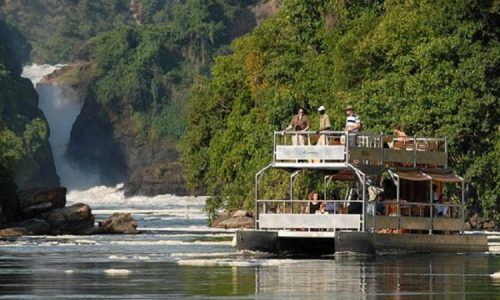
2 Days Murchison Falls Safari
In conclusion, animals that don’t drink water demonstrate how evolution shapes life to survive under extreme conditions. These adaptations not only highlight the resilience of wildlife but also emphasize the importance of conserving natural habitats that support such unique species.
Understanding these survival strategies helps travelers, conservationists, and wildlife enthusiasts appreciate the delicate balance of ecosystems across the world.
Explore Wildlife Safaris with Chimp Homes Uganda Safaris
If learning about unique animal adaptations inspires you to experience wildlife firsthand, Uganda offers exceptional safari opportunities. From savannah wildlife to primates and birdlife, Uganda is a top destination for nature lovers.
Chimp Homes Uganda Safaris specializes in tailor-made safari experiences across Uganda, including wildlife safaris, chimpanzee tracking, and gorilla trekking.
To book your safari or request a customized itinerary:
Phone: +256 742 874045 / +256 703 903243
Email: info@chimphomesafaris.com
Gmail: chimphomesugandasafaris@gmail.com
Let Chimp Homes Uganda Safaris guide you into the wild and help you discover nature at its most extraordinary.